Programmes de recherche


Paramédecine communautaire
Paramédecine communautaire à domicile (PC@domicile) et l’application Mon plan de soins (Application MyCP)

La paramédecine communautaire à domicile (PC@domicile) était une intervention de recherche délivrée par des ambulanciers communautaires au domicile des appelants fréquents des services médicaux d’urgence (SMU) atteints de multimorbidité. Son objectif était de fournir des évaluations des risques pour la santé et une orientation vers les services de santé et les services communautaires appropriés dans le but d’éviter les urgences médicales ou de rediriger l’accès vers des services de soins de santé plus appropriés.
Programme de paramédecine communautaire à la clinique (PC@clinique)

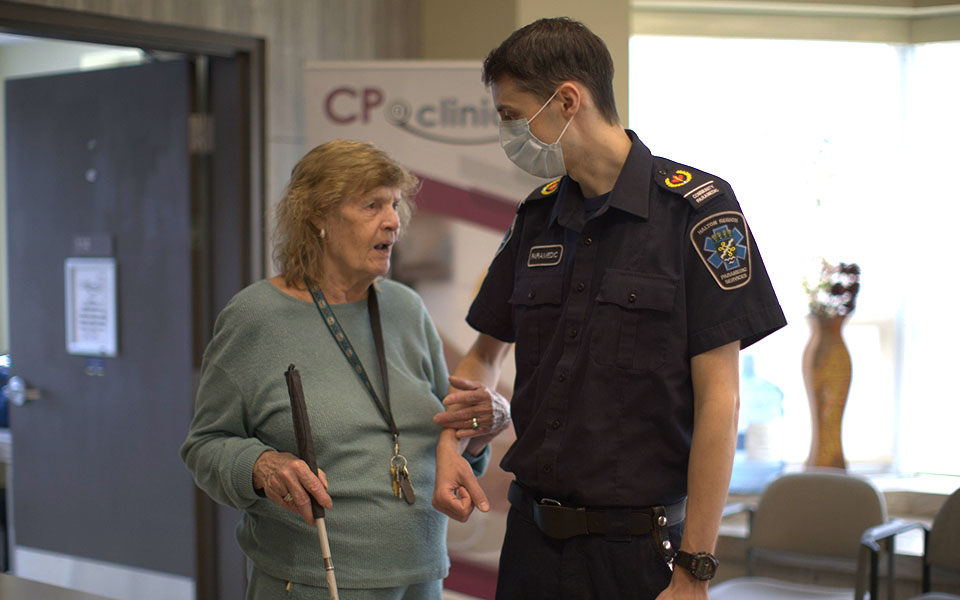
The PC@clinic program was developed to help keep low-income seniors healthy at home and reduce avoidable 911 calls. Community paramedics (PCs) take on a new non-emergency care role, visiting seniors in the common rooms of social housing to address their unmet health needs. PCs use evidence-based assessments to evaluate the health risks of seniors. The PC@clinic program’s database algorithms guide paramedics in setting health goals with program participants, providing them with tailored health education, and referring them to primary care and community resources.
Recherche internationale
Global justice through global health research leadership
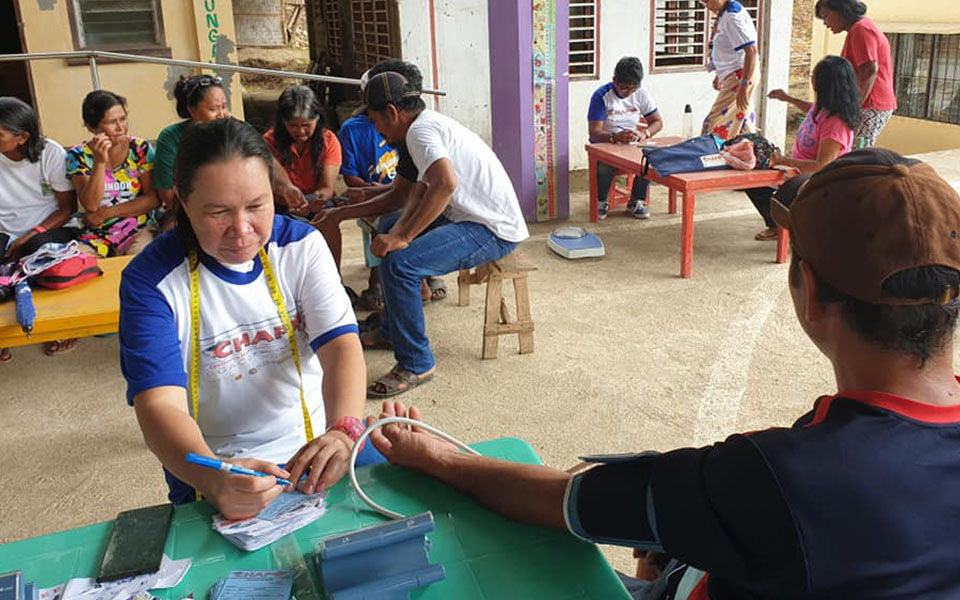
LMICs Research: Those living in poverty in both rural and urban areas in LMICs are a focus of projects that Dr Agarwal has either led or collaborated on. The CHAP-Philippines, Diabetes Risk Assessment Tools in LMIC, and cancer prevention research program in Thailand, all described in section A, aim to give health care access to those who are impoverished and marginalized. These research projects also help the LMICs to adapt appropriate technologies to strengthen their healthcare system.
Global Health Research Leadership: As a trailblazer, Dr. Agarwal is a designated leader and a member of many global alliance research groups (Diabetes, Hypertension, Multimorbidity) that consolidate knowledge and develop the research agenda to address the explosion of chronic diseases in LMICs and vulnerable populations in HICs.
Programme d’évaluation de la santé communautaire aux Philippines (CHAP-P)
Ce programme était une adaptation du programme CHAP qui a été évalué dans le cadre d’un essai contrôlé randomisé (ECR) en grappes communautaires dans des collectivités de petite et moyenne taille à travers l’Ontario. CHAP était un programme d’évaluation de la santé cardiométabolique et de promotion de la santé dispensé par des bénévoles en milieu communautaire. Ce programme de recherche a évalué (Cluster RCT) le CHAP dans les immeubles de logements sociaux au Québec et en Ontario. Cette étude a été financée par le CIHR.
Outil de travail sur le risque de diabète
La Dre Agarwal a collaboré avec des chercheurs aux Philippines (Ateneo de Zamboanga), en Indonésie (Université Siyah Kuala), au Népal et en Iran pour développer ou adapter des outils d’évaluation des risques de diabète pour le contexte local. Ces outils sont utilisés pour évaluer le risque de développer le diabète chez les individus et les orienter vers le fournisseur de soins de santé et la ressource communautaire appropriés pour l’identification précoce, la prise en charge, la promotion de la santé et la prévention des maladies. Ces collaborations permettent un apprentissage partagé et un transfert de technologie entre les différents pays participants.
Éducation et communication intensifiés sur la santé en milieu communautaire (eCHEC) : Recherche sur la prévention du cancer en Thaïlande
C’est un projet de recherche collaborative dirigé par la Dre Gina Agarwal (McMaster University, Canada) et le Dr Pattapong Kessomboon (Université Khon Khaen, Thaïlande). Le but de la recherche est d’évaluer l’intervention de l’Éducation et la communication intensifiés sur la santé en milieu communautaire (eCHEC) pour réduire les facteurs de risque de développer un cholangiocarcinome chez les résidents de la communauté de la province de Khon Khaen, en Thaïlande.
Consortium d’analyse des données et de cartographie géospatiale des appels d’urgence (EDGE) au Royaume-Uni et au Canada
C’est un projet de collaboration entre l’Unité de recherche communautaire et de santé (CaHRU), l’Université de Lincoln, au Royaume-Uni (avec le Dr Niro Siriwardena, le Dr Frank Tanzer et le Dr Mark Gussy), les Services d’ambulance des East Midlands et du Yorkshire et McMaster University initié par la Dre Agarwal. L’objectif du consortium est d’analyser et de comparer les données d’appels d’urgence au Royaume-Uni et au Canada, d’examiner les modèles de conditions sensibles aux soins ambulatoires, principalement les maladies chroniques, parmi les populations vulnérables (à faible revenu/ressources), d’identifier les facteurs (accès aux soins de santé, ressources communautaires, etc.) et développer/proposer des solutions pour améliorer la santé des populations par une utilisation appropriée des soins de santé primaires.


Déterminants sociaux
Dispensateurs de soins de santé à la clinique (DSPC@clinique)
Le modèle standard de la PC@clinique a été adapté pour être mis en œuvre par les professionnels de la santé. Il a le potentiel d’avoir un impact important sur la prévention et la surveillance des maladies chroniques chez les personnes âgées à l’échelle nationale.
Cohorte de logement social : Maladies chroniques, isolement social, modes de vie, COVID-19 et transitions de soins de longue durée depuis le logement social
Ce projet génère des connaissances et étudie les tendances en matière de santé, de maladies chroniques, de statut COVID-19 et d’utilisation des soins de santé, et le mouvement vers les soins de longue durée des résidents des logements sociaux, une population vulnérable, en nombre croissant. L’impact de ce travail est une prise de conscience accrue du fardeau de la maladie chez les résidents des logements sociaux afin qu’en fin de compte, la santé puisse être améliorée grâce à des interventions et des politiques. Dans le cadre de ce travail, des collaborations ont été établies avec la Dre Michelle Wyndham-West (OCAD), le Dr Jim Dunn (Santé et vieillissement, McMaster University), la Société canadienne d’hypothèques et de logement, le Collectif canadien pour la recherche sur le logement, l’Ontario Non-profit Housing Association et plusieurs autorités municipales locales de logement.
Étude clinique de santé juridique
Ce projet pionnier visait à connecter les populations vulnérables à l’aide juridique par le biais du cabinet des médecins de soins primaires – un cadre de confiance pour les populations vulnérables. Ce partenariat médico-légal a été très fructueux et la clinique de santé juridique a été maintenue à Hamilton et a favorisé le développement d’autres cliniques de ce type en Ontario.
Programme de sensibilisation à la santé cardiovasculaire (CHAP) dans les logements sociaux
Ce programme était une adaptation du programme CHAP qui a été évalué dans le cadre d’un essai contrôlé randomisé (ECR) en grappes communautaires dans des collectivités de petite et moyenne taille à travers l’Ontario. CHAP était un programme d’évaluation de la santé cardiométabolique et de promotion de la santé dispensé par des bénévoles en milieu communautaire. Ce programme de recherche a évalué (Cluster RCT) le CHAP dans les immeubles de logements sociaux au Québec et en Ontario. Cette étude a été financée par le CIHR.
Race, racialisation et santé
La race est reconnue comme un déterminant de la santé. La mesure avec laquelle elle affecte les individus n’est pas très bien appréciée au Canada, car peu d’études ont été faites sur le sujet. La Dre Agarwal a établi une collaboration avec d’autres médecins à McMaster (Dr Kapiriri de Santé et vieillissement à la Faculté des sciences sociales, et Dre Juliet Daniels du Département de biologie). Elle a obtenu un financement de démarrage de l’Institut McMaster pour l’équité en santé pour créer un programme de recherche dans ce sens. Ensemble, ils planifient d’inviter d’autres professeurs de McMaster et d’explorer l’impact de la racialisation sur la santé des Canadiens
Vieillissement en santé des adultes bénéficiant d’un soutien dans la communauté et de leurs aidants
La race est reconnue comme un déterminant de la santé. La mesure avec laquelle elle affecte les individus n’est pas très bien appréciée au Canada, car peu d’études ont été faites sur le sujet. La Dre Agarwal a établi une collaboration avec d’autres médecins à McMaster (Dr Kapiriri de Santé et vieillissement à la Faculté des sciences sociales, et Dre Juliet Daniels du Département de biologie). Elle a obtenu un financement de démarrage de l’Institut McMaster pour l’équité en santé pour créer un programme de recherche dans ce sens. Ensemble, ils planifient d’inviter d’autres professeurs de McMaster et d’explorer l’impact de la racialisation sur la santé des Canadiens
Health Awareness and Behaviour Tool (HABiT)
The HABiT questionnaire was developed in 2014 by Dr. Gina Agarwal and colleagues to better understand the health and health behaviours of low-income community-dwelling older adults. A literature review was completed at that time and did not find an existing survey that would meet the needs of the research project. The existing surveys identified were either not tailored to seniors or were not comprehensive (i.e., focused on only one or two topics in detail). A tool was needed that was comprehensive, tailored to an older adult population, and feasible to complete in 15-30 minutes (Agarwal et al, J Health Popul Nutr, 2019). It was also important to consider the low literacy and low health literacy of the social housing population (Agarwal et al, Can J Public Health, 2018).
Since its development, the HABiT has been used to collect health and health behaviour data from thousands of older adults in Canada. If you or your organization would like to access the HABIT questionnaire for non commercial purposes, please fill in the following form.